You hit publish and then you wait. Refresh and refresh again, but still quiet. If you have ever asked yourself what the best time to publish blog posts is, you are not alone. In 2026, timing still feels like a hidden shortcut, especially when you worked hard on a post and you want it to get the maximum reach possible. This guide will help you stop guessing. We will look at what data usually shows, what is just an internet myth and what SEO actually cares about – so you can pick a time with confidence and move on with your day.
Why the Best Time to Publish Blog Posts Matters in 2026
Google is not sitting there with a clock, waiting to reward you for publishing at 9:00 AM. But people? People do have patterns. They check their email on the way to work, skim during lunch and read at night when the house is quiet.
So the best time to publish blog posts is less about “pleasing an algorithm” and more about meeting real humans when they are ready to click.
There is another reason timing matters: momentum. A post that gets early clicks, shares and replies often travels farther. Not because “time” is a ranking factor, but because early activity helps your content get seen.
What the Data Usually Says About Day And Time
Most timing advice online sounds confident, sometimes too confident. Here is the calmer truth: data gives you a starting point, not a promise. Treat it like a map, not a prophecy.
A simple baseline many sites can start with is this:
- best day to publish a blog post: Tuesday, Wednesday or Thursday
- best publishing time: morning (roughly 8 AM–11 AM in your reader’s timezone)
That baseline works often because many audiences are active during workdays and mornings are when people catch up on “what’s new.” But it is not universal.
If your audience is global, your “morning” may be someone else’s midnight. If your readers are students or creators, evenings may win. For some sites, the best day to publish a blog post is Sunday. For others, it is Monday early morning.

So take the baseline, study your audience group and then test it for yourself. One more helpful idea: think in “windows,” not exact minutes. If your readers tend to be active between 9 AM and noon, you do not have to hit one perfect minute. Pick a window, publish inside it, then use the rest of the window for promotion – email, social, community posts, whatever you do. The post has time to breathe.
Also, do not forget the difference between “publish time” and “share time.” You can publish early, then share later when people are actually online. That one change can make a post feel like it got a second life without rewriting a single line.
SEO Reality: Best Time to Publish Blog Posts for Maximum Reach
This section usually surprises people. There is no universal best time to publish blog posts for SEO if you mean “the hour that guarantees rankings.” That hour does not exist. SEO results usually depend on relevance, quality and whether readers feel satisfied.
Still, timing can help SEO in indirect ways. Here is a simple way to think about it. Some topics are “fresh,” like breaking updates or new feature releases. Other topics are “evergreen,” like how-to guides that stay useful for years. Fresh topics reward speed. Evergreen topics reward depth and clarity.

For evergreen content, your job is not to panic about timing. Your job is to make the page genuinely helpful, easy to scan and easy to discover. Add internal links from related posts. Make sure the title is clear. Update the page when things change. Those actions usually matter far more than the hour you click publish.
Fresh topics move faster. If your post is about something time-sensitive like updates, breaking news or new releases, being early helps. In those cases, the best time to publish blog posts for SEO is often “as soon as it is ready.” Not perfect, ready.
Indexing is not instant. Search engines need to discover and crawl your page. That can take minutes or days. Sites that publish consistently often get discovered faster over time. This is one reason a steady publishing routine can help your overall publishing rhythm.
Early engagement helps distribution. When readers click quickly and share quickly, your post has more chances to earn links and reach new people. That does not mean you rank because you published at 10 AM. It means you earned attention sooner.
So yes, the best time to publish blog posts for SEO is real. But it is not about a magic hour; it is about matching the moment and staying consistent.
How to Find Your Own Best Publishing Time?
If you want your own best time to publish blog posts, stop chasing universal charts and start reading your own data. This is where most blogs improve fast, because the answer is already sitting in your analytics.
Start with your audience activity. Look for patterns:
- When do you get the most clicks from email?
- When do your social posts get the most engagement?
- When does your site traffic spike?
This is how you find your real best time to publish a blog post. It is the time your audience actually shows up.
Then set a simple routine. A good blog post publishing schedule is boring in a good way. It removes stress and creates habits. It stops “we will publish when we can” from becoming your brand. Start with something realistic: one post per week, same day, same time. Or two posts per week, same days, same time.
Finally, put your plan on a calendar. A content calendar for blogging helps you see gaps, themes and deadlines. It also keeps you from publishing three similar posts in a row. SchedulePress makes the calendar view feel natural. You can plan, drag, drop, draft, schedule, publish and adjust without living in a spreadsheet.
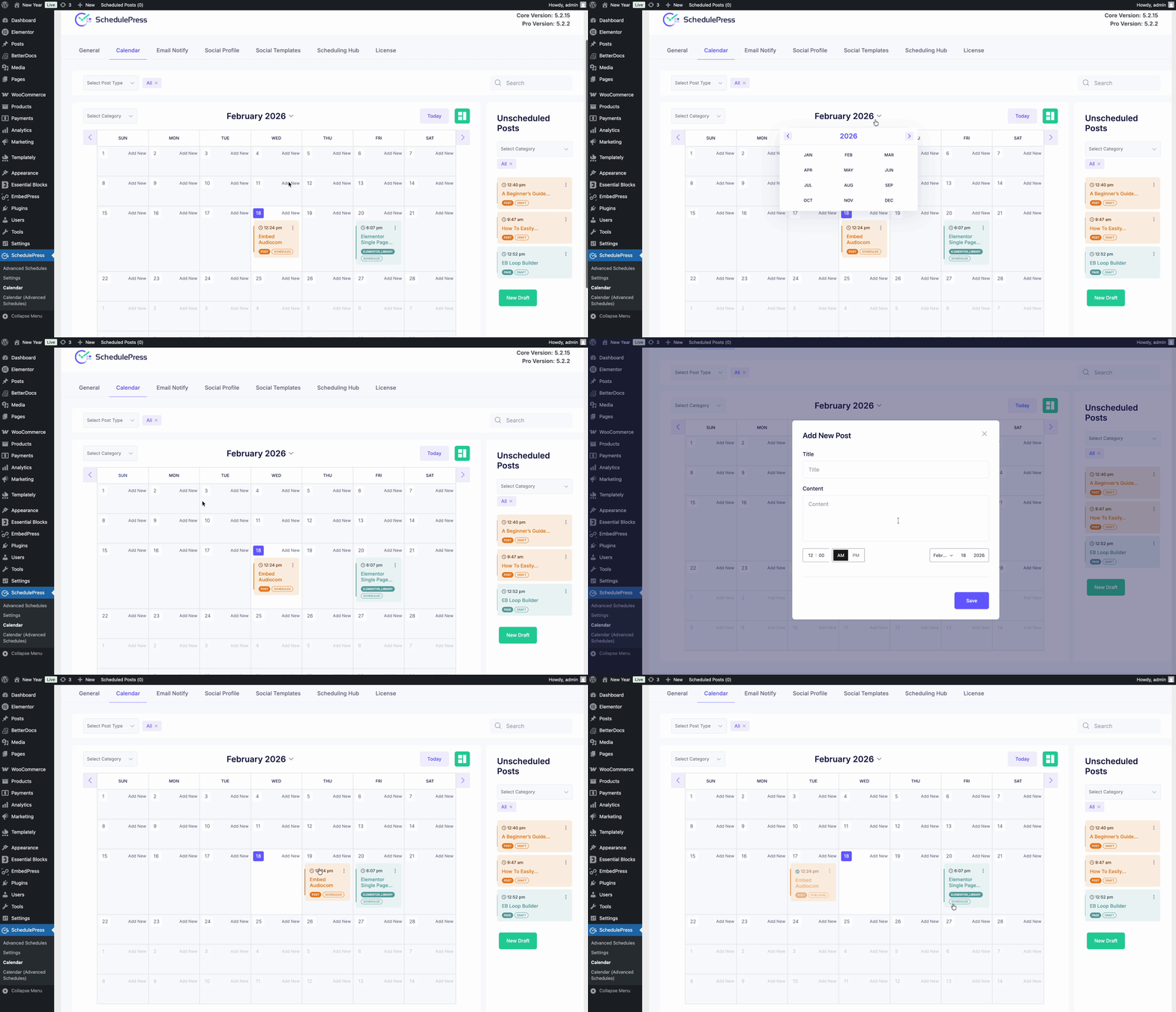
And yes, your calendar is also your testing tool. A content calendar for blogging lets you schedule different time slots on purpose, then compare results later.
A quick tip that saves time: do not test ten different times. Test two or three. Give each one a fair run, then decide. Your goal is not to “win the internet.” Your goal is to learn what works for your readers.
If you have multiple audiences, you can even run a simple split. Publish most posts at your main time, but publish one “experiment post” each month at a different time. Keep the topic similar to your usual content. That way, you are testing timing, not testing a completely different audience.
Best Time to Publish a Blog Post on WordPress & Keep It on Track
You can pick the perfect time and still miss it if your settings are wrong. If you publish in WordPress, the best time to publish a blog post on WordPress depends on two things:
- Your site timezone
- Your audience’s timezone
If your site’s timezone is off, your schedule can be off. Sometimes by an hour, sometimes by a whole day. It is a small setting that causes big confusion. Before you worry too much about the best time to publish a blog post on WordPress, do this quick check:
- WordPress timezone is correct
- You are scheduling in the right timezone for your audience
- Your scheduled posts actually publish when they should
This is where blog post scheduling in WordPress becomes your best friend. Scheduling removes the human error of “I will publish it later.” It also helps teams stay consistent when work gets busy.
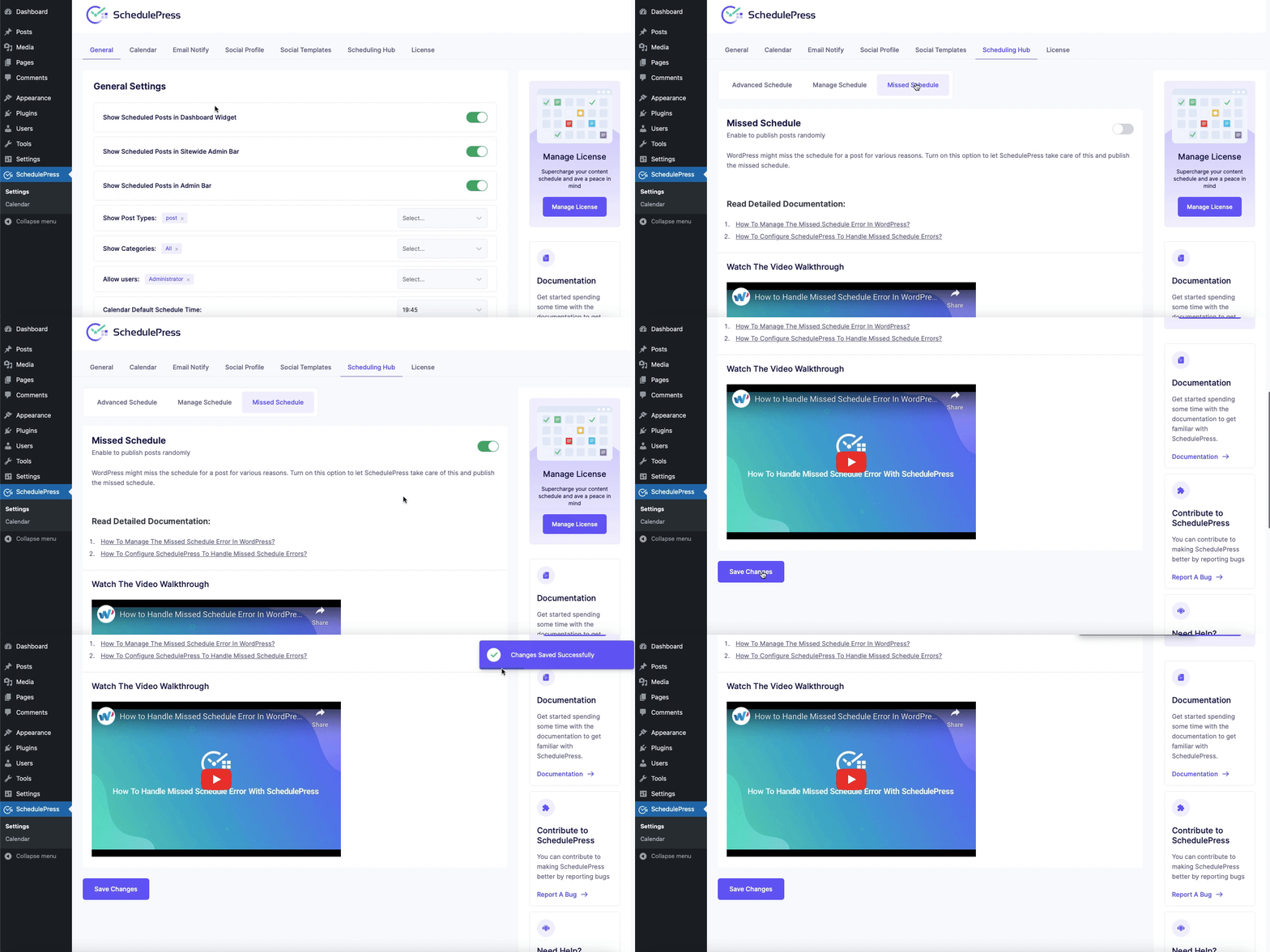
On some sites, WordPress scheduling can miss a publish time, especially if the site has low traffic or heavy caching. That is why tools like SchedulePress include a missed schedule handler to keep your blog post scheduling in WordPress reliable even when your week is not.
If you work with a team, add one more habit: a quick “publish check.” It is a 30-second look at the scheduled time, the timezone and the final version of the post. That is it. Small check, big protection.
And if you plan content weekly (which is usually the easiest rhythm), schedule your posts in one batch utilizing SchedulePress. One sitting, one calendar view. Then you can stop thinking about timing every morning and focus on writing better posts.
Myths & Mistakes That Waste Time
Let us clear the noise quickly by taking a look at some common myths and misconceptions. Check these out:
Myth: “If I publish on the best day, I will rank faster.”
Publishing on the best day to publish a blog post does not guarantee rankings. It can help with early engagement. That is it. If you want better results, focus on a stronger headline, a clearer intro and a more complete answer.
Myth: “One publishing time fits everyone.”
Your readers might be in different time zones. They might read late at night or on weekends. That is why testing matters more than guessing.
Myth: “Manual publishing is safer than scheduling.”
Manual publishing feels safe because you are in control. But it also causes mistakes. You forget, publish late and publish in a rush. A clean system of blog post scheduling in WordPress is often safer.
Myth: “I do not need a publishing schedule.”
You do not need one until you do. A blog post publishing schedule is how you stop relying on motivation. Motivation comes and goes but a plan you can repeat stays.
A Simple 2026 Plan You Can Follow & Improve
If you want a clear plan, here it is. Nothing fancy, just smart.
1) Pick One Baseline for Four Weeks
Start simple, for example:
- best day to publish a blog post: Wednesday
- best publishing time: 10 AM (reader timezone)
Publish at that same time for four weeks. Keep your blog post publishing schedule steady during this test, so the results are meaningful.
If you use SchedulePress, you can place each post on the calendar, move it to a new day and keep your schedules organized without breaking your workflow.
2) Change Only One Thing at a Time
If you change the day, the time, the topic and the headline all at once, you learn nothing.
Test like this:
- Month 1: Wednesday at 10 AM
- Month 2: Tuesday at 10 AM
- Month 3: Tuesday at 2 PM
Now you can compare. Now you can learn your real best time to publish blog posts.
3) Track Signals That Actually Matter
Do not overcomplicate this. Look at:
- clicks in the first 24 hours
- average time on page
- email clicks (if you send emails)
- search impressions over the next few weeks
If you care about SEO, the timing that helps SEO will not be a single hour. It will be a system that helps you publish, get indexed and earn attention consistently.
4) Tie Post Timing to Promotion
Even if you picked the best time to publish blog posts, your post still needs a push. Try this simple rhythm:
- Share once right after publishing
- Share again 48–72 hours later
- Add the post to your newsletter (if you have one)
- Link to it from older posts
When you plan publishing and sharing in one workflow, everything gets lighter. And your content calendar for blogging starts doing real work, not just looking pretty.
Utilize Your Own Best Times & Stay Steady in 2026
In 2026 and beyond, the best time to publish blog posts is not a secret hour hidden in an SEO rulebook. It is a repeatable system: a clear content calendar for blogging, a steady blog post publishing schedule and reliable blog post scheduling in WordPress that keeps you consistent even when life gets busy.
Start with a smart baseline, test it calmly, keep what works and then lock it in. Because once you find your own best time to publish blog posts, publishing stops feeling like guesswork and starts feeling like progress.
If you want more tips and tutorials like this, be sure to subscribe to our blog and join our friendly Facebook Community to stay updated with the latest WordPress trends and social media marketing insights.