You hit publish. Then you share the link once and hope it takes off. When the post stays quiet, it is easy to blame the algorithm or think the content just did not work. But often, the problem is not the post itself. It is the promotion. Social media cross promotion helps you give one strong piece of content more than one chance to be seen, clicked and remembered across platforms without sounding repetitive. In this guide, you will get a simple framework, repurposing ideas and a repeatable workflow you can run from your WordPress calendar.
Why Social Media Cross Promotion Is Not Just a Copy-Paste Job
Cross-promotion only feels cringeworthy when there is no real effort behind it. Same caption, same link, same vibe – everywhere. Done well, social media cross promotion is more effective than you could imagine. It says, “Here is one useful idea,” and it shows up in different formats so different people can actually notice it.
A good starting point is the explanation of the difference between crossposting and content repurposing (adapting the idea into new formats). When you blend both, you get reach and you keep your content feeling fresh.
Here is where many teams slip. They think the job is to post more. But the real job is to run a clear content distribution strategy – a plan for where the content goes, when it goes and what “success” means beyond likes.
Three Quick Types of Cross Promotion
- Cross-promote platforms: “Follow us here for X and there for Y.”
- Cross-promote content: this is where you cross promote content on social media with a link, a teaser or a hook.
- Cross-promote campaigns: one bigger thing (a launch, webinar or sale) across multiple channels.
All three can work. But if you are starting today, you should focus on content. It is the easiest to repeat and measure.
Myths That Make Cross Promotion Feel Spammy
Myth 1: “If I share the same link twice, people will hate me.”
Reality: People miss posts. Sharing again helps the right people see it. (Even HubSpot recommends sharing links multiple times with a new context.)
Myth 2: “Cross promotion means posting the same thing everywhere.”
Reality: That is crossposting. It can be useful, but it is not the whole picture.
Myth 3: “I need to be on every platform for this to work.”
Reality: You need a plan you can sustain. Two platforms done well beat seven platforms done randomly.
That is why social media cross posting best practices matter: keep the idea consistent, but adjust the hook, the format and the CTA so it fits the platform.
Here is a quick gut-check: if a post feels like it belongs on every platform, it probably belongs on none of them. The point of social media cross promotion is to make the same idea feel natural everywhere, not identical everywhere.
And yes, this is also how you safely cross promote content on social media without training your audience to scroll past you.
How to Build a Multi-Platform Social Media Strategy around One Idea
If your social media plan is “post whenever,” your results will look like “whatever.” That is not a judgment; it is just how randomness behaves.
A multi platform social media strategy gives you a map. It tells you what each platform is for, what format works best there, and how you want people to move between platforms (and back to your site).
Before you make a calendar, make these decisions. Keep them simple and write them down.
Choose Your Home Base and Your Attention Platforms
Pick your home base first, usually your website or blog. That is where your best content lives and where long-term SEO and email signups can compound. Then pick 2–3 attention platforms. These are where discovery happens: short posts, quick threads, carousels and community conversations.
Your basic flow:
- Publish on home base → share on attention platforms → reshare with new angles → link back when it makes sense.
That flow is social media cross promotion in its easiest form. One source with many doors.
Give Each Platform a Role (to Stop Forcing Content)
Here is an easy role system you can copy:
- “Explain” platform: you teach. (Longer posts, context, breakdowns.)
- “Hook” platform: you grab attention fast. (Short and scroll-friendly.)
- “Visual” platform: you show, not tell. (Carousels, before/after, quick clips.)
When you assign roles, you instantly stop making bad cross-posts. You also stop rewriting everything from scratch. Your multi platform social media strategy becomes predictable in a good way.
One more thing that helps: choose a “primary” platform for each post before you start writing. That keeps your social media cross promotion focused. You are not trying to make one post do ten jobs.
And when your goal is to promote blog posts on social media, this role system keeps your promotions from sounding like ads. You lead with value, then you invite the click.
Utilize Content Repurposing That Feels Fresh
The best feeling is writing one deep post, then watching it fuel a whole week of content. The worst feeling is writing one deep post, then letting it die after one share.
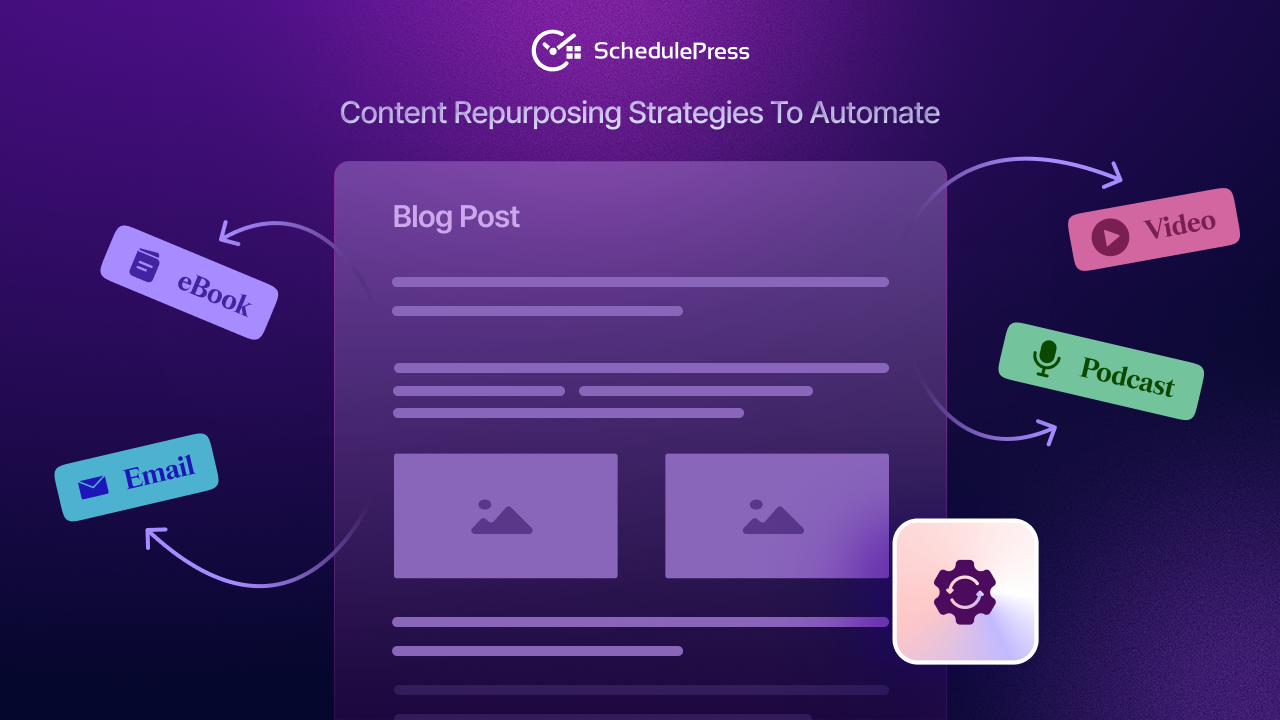
That is why social media content repurposing matters. Repurposing is not copying, it is translating. Same point, new form.
Repurposing guides frame this clearly: crossposting saves time, while repurposing supports content distribution because it adapts to the format and audience expectations.
You could start with a simple “one post, five spins” recipe. You can do this in 20 minutes once you get used to it.
- Hook post: Pull the most surprising line from your blog and build a short post around it.
- Checklist post: Turn the steps into a 3–5 point checklist.
- Story post: Explain why you wrote it. What problem did it fix? Make it human.
- Visual post: A tiny diagram, a screenshot or a carousel of key points.
- Question post: Ask the audience what they do now and what they struggle with.
You can use these five spins to promote blog posts on social media without repeating the same caption. Each spin gives people a different reason to click. This is also where a content distribution strategy becomes practical: you are not guessing what to post tomorrow. You already have a stack.
What to repurpose from a blog post? Here are some quick ideas:
- Turn each H2 heading into a post hook.
- Turn the intro into a short “problem → solution” caption.
- Pull one example and tell it as a mini story.
- Turn the conclusion into a next-step checklist.
That is social media content repurposing at a beginner level. But it is small, fast and useful. And, keeping a “repurpose notes” section in your draft will save you hours later. As you write the post, mark lines that feel shareable. Future you will thank you.
A Social Media Promotion Schedule You Can Repeat & Scale
You do not need a perfect schedule. You need a repeatable one – the kind you can follow on your busiest week. A social media promotion schedule is simply your sharing rhythm: what you post after publishing and when you resurface it.
A calm 7‑day rhythm for one blog post:
- Day 1: Publish + share the main hook
- Day 2: Share a key takeaway
- Day 3: Share a checklist or quote
- Day 4: Share a short video or carousel
- Day 5: Share a question that invites replies
- Day 6: Reshare the link with a new hook
- Day 7: Roundup: “In case you missed it…”
This is how you cross promote content on social media without sounding like a broken record. You are not repeating the same words. You are repeating the same idea with different angles.
Now, do not confuse “publish time” with “share time.” You can publish in the morning and share in the afternoon if that is when your audience is active. That tiny change often wakes up your results.
If you want to keep it even simpler, start with a 3-touch plan:
- Day 1 share
- Day 3 reshare
- Day 7 reshare
That is still a social media promotion schedule. And, it is already better than one‑and‑done. If you want this to improve over time, track one simple thing: link clicks. Add UTM tags to your URLs. You will then start seeing patterns – what hook works, what platform sends traffic and what angle gets saved.
That is how social media cross promotion becomes measurable instead of mystical. And because this schedule uses angles (not duplicates), it naturally follows social media cross posting best practices without you having to memorize any “rules.”
Quick Guide: How to Run Social Media Cross Promotion from WordPress with SchedulePress
If your content is built in WordPress, that is your control center. It is where drafts live, where posts are published and where your team collaborates. So it makes sense to manage promotion close to WordPress, too. Otherwise, you publish a post, then start the tab-hopping routine. That is where momentum dies.
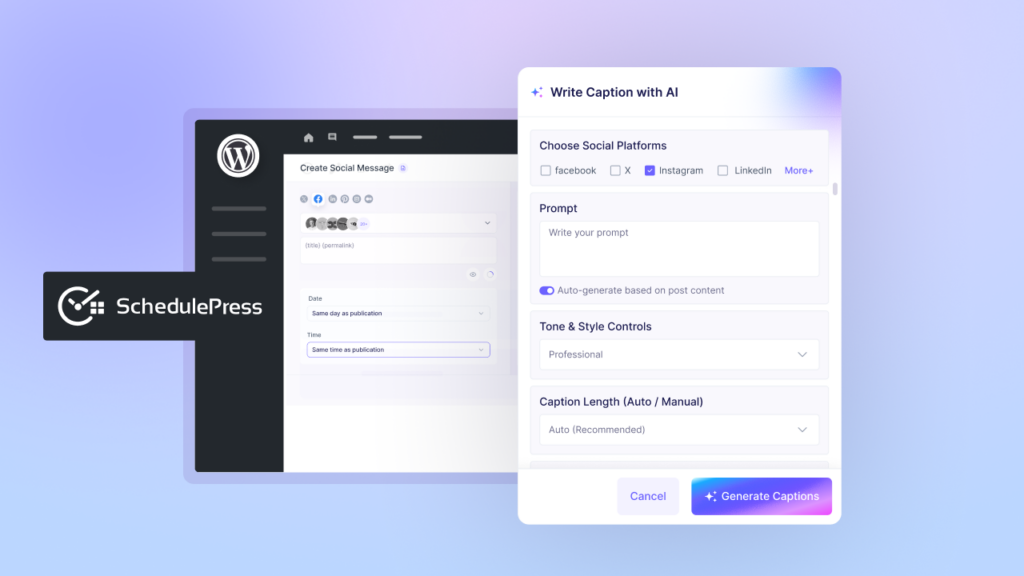
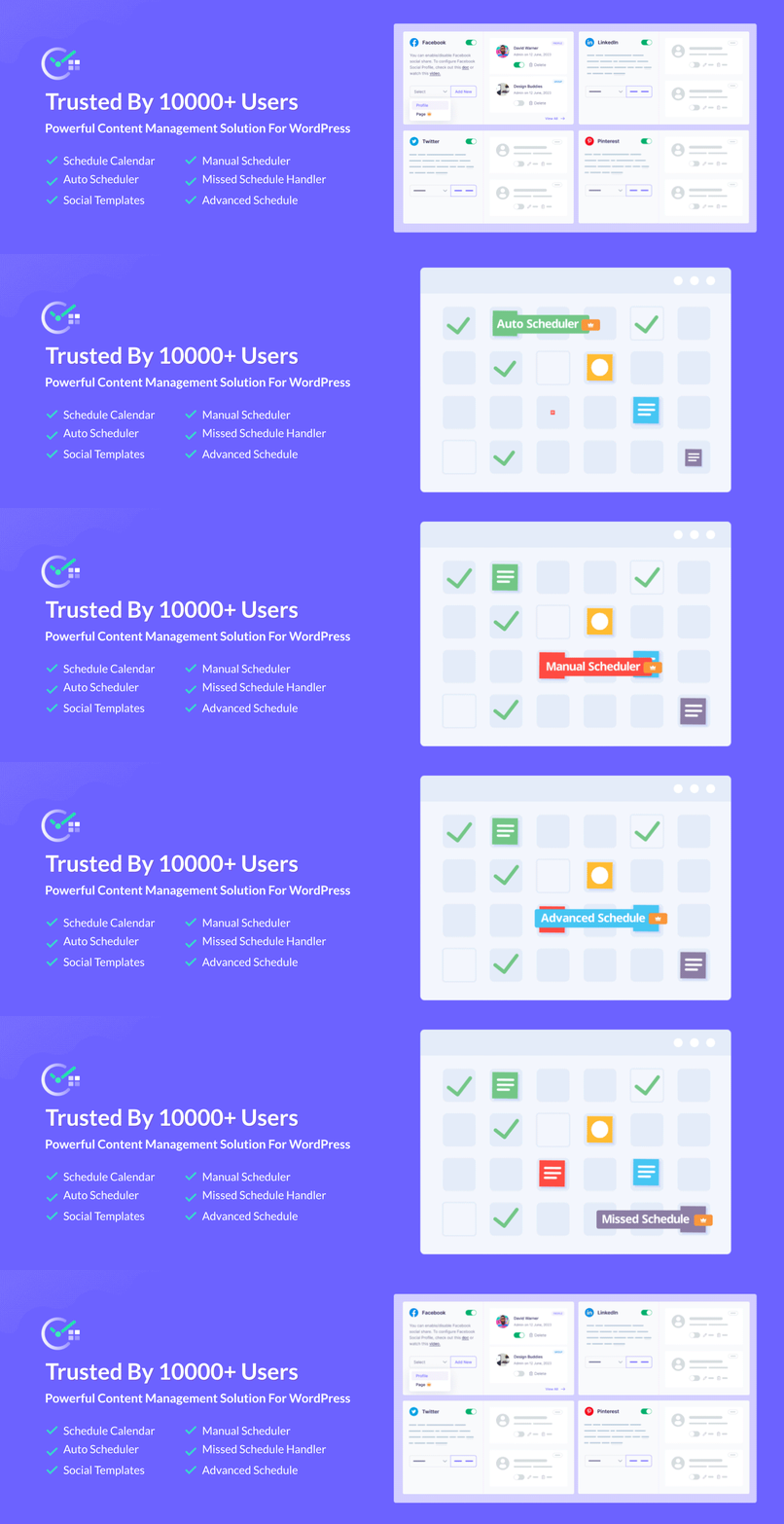
SchedulePress is designed to unify scheduling and social sharing from inside your WordPress dashboard. It offers a calendar view, auto/manual scheduling and social templates for sharing posts across platforms.
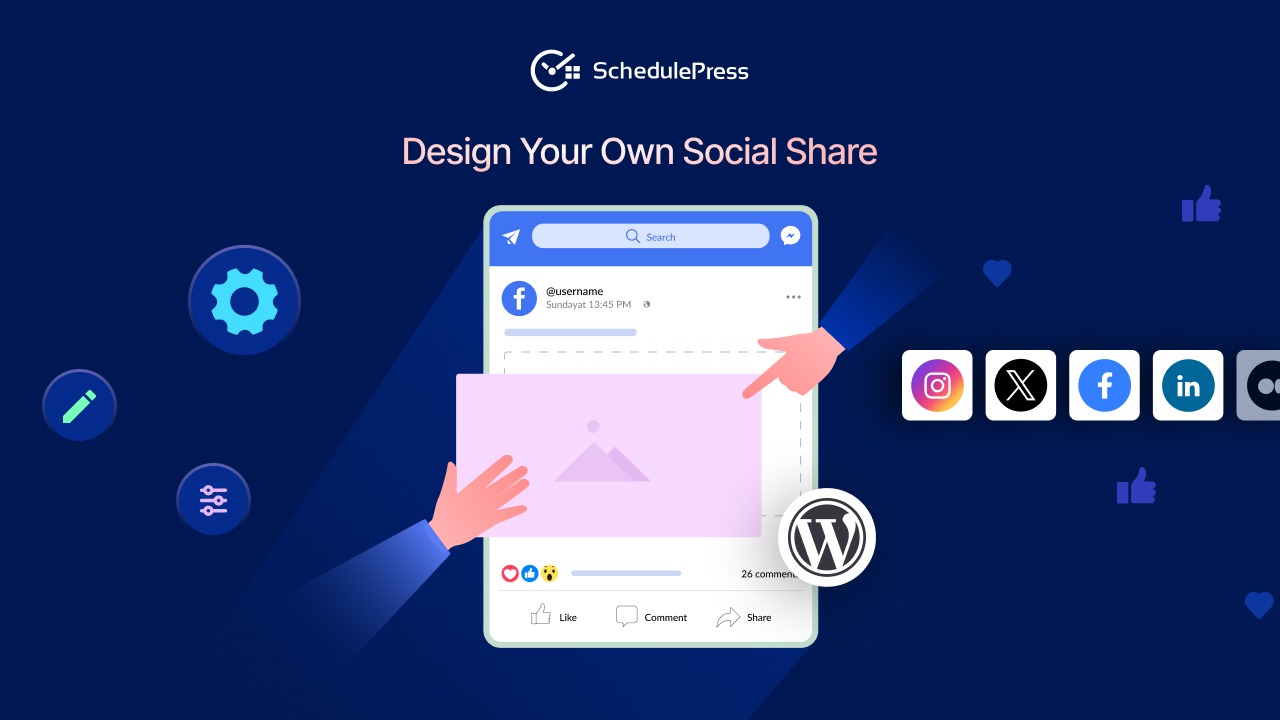
SchedulePress can also auto share WordPress posts to major platforms and lets you create global or platform-specific templates with dynamic placeholders (like post title, permalink and excerpt). That means your auto shares can still look human.
A Simple Setup Workflow with SchedulePress
Here is the basic setup flow to run social media cross promotion from WordPress with SchedulePress:
- Install SchedulePress and open settings in your dashboard.
- Connect your social accounts in the Social Profile area (it is a one-time setup).
- Create a global template or utilize the custom templates.
- Choose which networks should auto-share when posts publish (or schedule shares for later).
- Test with one post, then scale.
Templates from SchedulePress could also be your secret weapon. They make your multi platform social media strategy sustainable because you are not starting from scratch every time. They also make social media cross promotion safer, because you can control which account posts what and keep your message consistent.
This is also where you prevent the classic mistake: posting a personal tone on a brand page, or vice versa. Build a simple account map (even a note in your team doc) that says: “This profile shares tips,” “This one shares product updates,” and “This one is for community questions.” Then your social media cross promotion stays consistent even when more people join the workflow.
How to Map One Post across Platforms
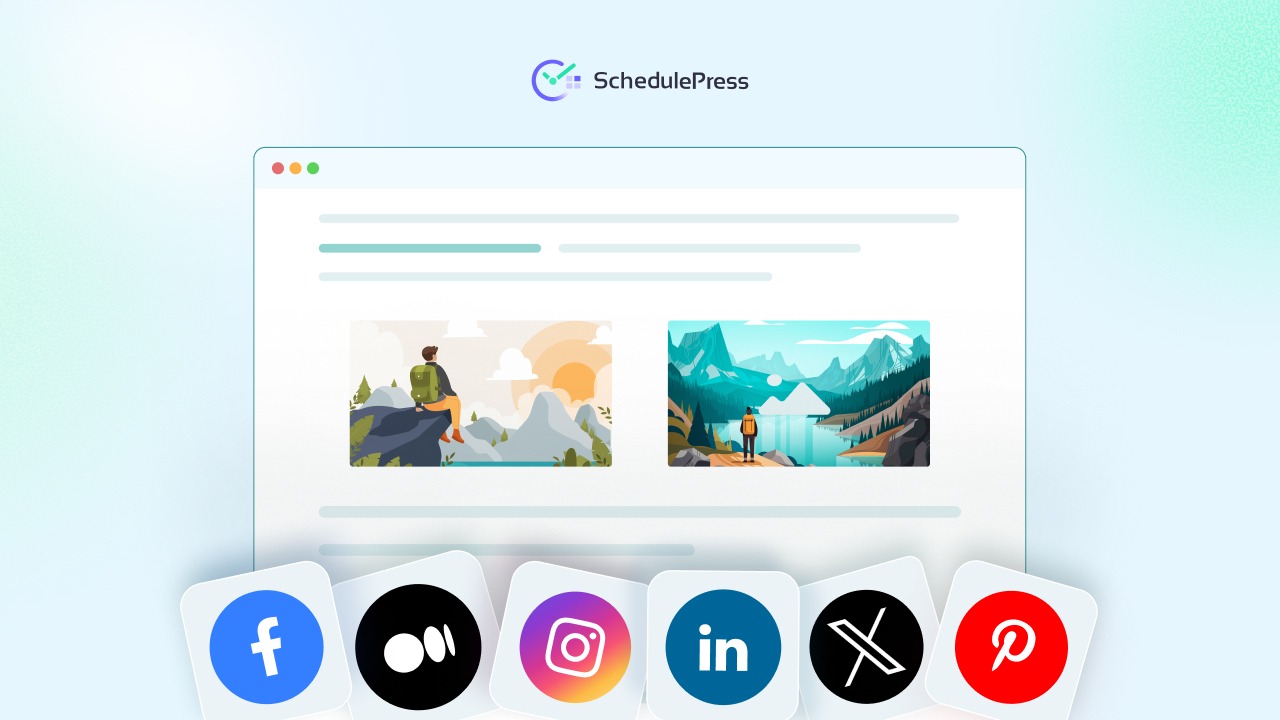
Use this mapping for one WordPress blog post:
- LinkedIn: “Why it matters” hook + 2 takeaways + link
- X: one sharp line + link (or a short thread)
- Facebook: story angle + link
- Instagram: carousel of key points + CTA to read the full post
This is how you promote blog posts on social media without sounding salesy. And because it is planned, your blog does not rely on “remembering later.”
If you want to follow social media cross posting best practices without overthinking, change the first line for each platform. Keep the link and the idea. Just shift the entry point. That small tweak is the difference between “helpful” and “autopost.”
And when you combine templates, a calendar and that one-line tweak, social media cross promotion stops being extra work. It becomes part of publishing.
Simplify Social Media Cross Promotion with SchedulePress Today
If cross promotion has felt messy, it is probably because you were trying to do it by memory. Memory is not a strategy; it is a stress system.
Start with one post. Build a simple content distribution strategy around it. Then use social media content repurposing to create a few platform-friendly angles and put them into a social media promotion schedule you can repeat.
Most importantly, keep the workflow close to where you publish. If WordPress is your home base, SchedulePress helps you keep planning, scheduling and sharing in one place – so you can run social media cross promotion consistently, without losing your mind.
If you want more tips and tutorials like this, be sure to subscribe to our blog and join our friendly Facebook Community to stay updated with the latest WordPress trends and social media marketing insights.